Share this article

Jazz as a Working Metaphor for Life

Charlee Remitz • May 10, 2025
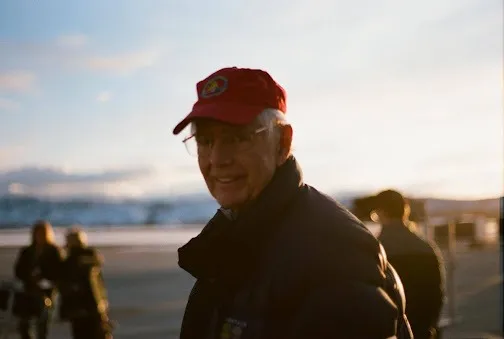
Grandpa Remitz standing on the shoreline smiling wearing a red cap and black jacket

Like most endings, my grandfather’s death ushered in a new dawn—the era of jazz. It was April of 2020 when his Alzheimer’s became too unmanageable for my small grandmother and their Florida house to contain. He forgot how to catch himself when he fell, and his body became black and blue. I’ve decided, in all my amateur field work, Alzheimer’s is many things, but the very worst of them is the complete departure of one’s motor function. It was not the instability—we can all withstand a fall—it was knowing to throw your arms out before the whole hulking mass of you hit the floor. To tuck your head and do it with a shred of grace. 


The family, like a small tribe on a wintry planet bracing itself for a time without sun, descended into chaos when our patriarch forgot how to golf—the most observed of his hobbies. We picked over his diet, sharing Internet search inquiries and intuition, like some of us had more insight into the dilemma simply because we felt something to be true. There was so much sensation. So much open grief. We wished it could be so simple as to take away sugars, to serve him meals slightly resemblant of bird food. But there was no keeping him alive, no anchoring him to the present. There was no willing his disease away. It was a realization humans would suffer again and again: that life ends, and at no point does it become as putative as one’s need to sleep. 


We couldn’t keep involving ourselves in a fight that wasn’t ours. And no matter what can be said about the final stages of Alzheimer’s, I still feel there’s a certain spiritual presence lording over the host, and perhaps that’s who we bowed to in the end. He was done—we were no longer in denial of that fact—and so were we. 


We moved him into a memory care unit in Montana, outfitting his small apartment there with furniture that came as a part of a set. It was strange, not unlike a parent furnishing their child’s dorm. We shifted uncomfortably in our new roles around this alien dependent, and when we left, he didn’t leave with us, which was the strangest sensation of all. 


When we visited, we had confused, and often distressing, conversations with him through a screened window. At times, he grew so upset that the visits were cut short, the nurses assuring him he knew the masked strangers peering in at him like he was a bird at the zoo. In fact, they were family! The whole enterprise felt like a hell specific to him. He, who had the faces of his grandchildren printed on his skis so he could point to them with his poles when talking about us to random skiers on the chairlift. He, who lived to the tell the tale of the ten thousand misadventures he dragged us on. He was no match for a life of anonymity, for a world without his legacy. And in two months’ time, he took one final, epic and injurious plunge. 


In hospice, like a little boat in the eye of the hurricane, he sipped chocolate milkshakes through a straw while my grandmother wet his lips with a sponge at the end of a stick. He had meaningful, soundless conversations with a bright spot in the corner of his room, at times pointing at it with the last of his conviction, his mouth agape or tipped slightly in the direction of a smile. We couldn’t be certain, but in our different estimations of What Comes Next, the family became convinced he could see it. Whatever it was. Wherever it would take him. 


He left behind all the usual things: photobooks with the original negatives, clothing, a staggering wealth of Scotty Cameron putters. And for me, a large box of vinyl in different stages of wear and tear. There was no Sinatra or Tony Bennett. No Dean Martin or Bobby Darin. As I fingered through those albums, I felt uniquely rich. Loss was as significant as it was final, and there I was on the floor meeting my grandfather through this corpus of jazz again. 

His was no collection to imply a purely selfish interest. There were vocalists—sure—the occasional live album—Etta James in Montreux, numerous recordings from the Blue Note—Bing Crosby’s extensive Christmas catalogue, and compilations done by Playboy. But mostly, there were instrumentalists. Art Blakey, Bill Evans, Miles Davis, Thelonius Monk, Charles Mingus, Art Tatum, J.J. Johnson. Records meant to be supplementary, when the lights were low, and bottles of Ruinart were free-flowing, every conceivable surface covered in cheeses and food, candles lit on the built-ins as if for a midnight vigil. Here was the legacy of a life spent in service of bringing people together in all the plain and blockbuster ways. Here was my grandfather, as vivid as ever.


My mother and I spent many weeks in Montana standing watch over my grandmother as she received various cakes and flowers and covered platters of foods and visits from her neighbors. We drank wine and played cards on the patio, and I followed the trails through the neighborhood, listening to essays from the New York Times about Val Kilmer and “The Woman Who Might Find Us Another Earth”. And then, when my grandfather’s remains were emptied into a sable urn and we’d flipped through a catalogue, picking out jewelry and crystal balls we could have made with his ashes, my mother and I packed up our car, with our geriatric dog, Aspen, and the box of vinyl in tow, and we drove back to our second-floor Hollywood condo, where we continued to wait out the pandemic.
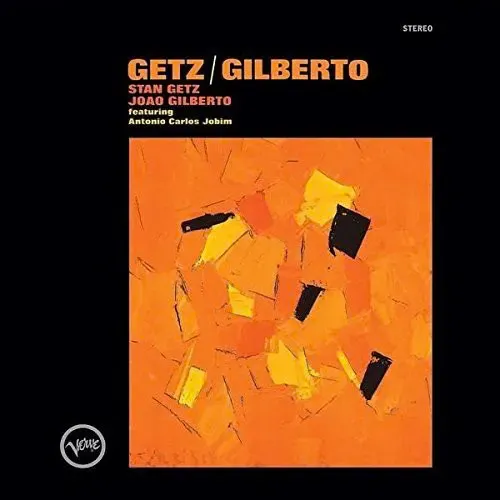
Album cover:

Only this time, we had jazz. 


We had Getz/Gilberto with “The Girl from Ipanema”, and when we played it, life felt like a movie. It teemed with possibility. We became mixologists. We learned how to make cilantro margaritas from a Facebook video uploaded by our old country club, watching as they smashed gobs of cilantro into the fresh juices of limes and oranges. We celebrated the tiny yields from my quarantine garden with farm-to-table bruschetta and lined the staircase leading up to our front door with blue bottles and fairy lights. For the first time in a long while, I picked up the guitar, and, with it, I wrote an entire album.


There was absolutely no reason losing the most significant man in my life should set off a time of deeply felt romance, but this was an era of whimsy. Of fresh air pouring into the house at all hours of the day. We were forced to slow down by the pandemic, to find ostensible meaning in doing less, and the jazz only helped to ease the compulsion to speed back up and go as fast as we can. 


Losing him felt impossible, but jazz made it possible. Jazz made my grief sparkle, gleam. I may not have sat in his office with him while he pulled out the tumbler of scotch and taught me to savor its sweetness, but I was touched by his elegance. I would always endeavor to be as elegant as he was, and I realized part of this elegance was just an extraordinary and uncanny ability to be spiritually present in the world. He was always there when I spoke to him. And I wanted to be here too. 


When Vinicíus de Moraes spoke about the girl from Ipanema, a real Carioca living on Montenegro Street in Rio de Janeiro in the 60s, he called her “golden.” He said she was “full of light and grace, the sight of whom is also sad, in that she carries with her, on her route to the sea, the feeling of youth that fades, of the beauty that is not ours alone—it is a gift of life in its beautiful and melancholic constant ebb and flow.” 

And that was just it. 


I’ve recognized jazz as a working metaphor for life itself. There is an ebb and flow to the musicians on stage. A certain rhythm that takes some time to settle into. Part of me thinks jazz finds you when you’re ready, that it’s meant for the meditative, for those who’ve found the courage to let their hearts do the leading. It doesn’t seem possible to play something so intuitive otherwise, to compose with your mind busy managing. 


By leaving me to sit in thoughtful contemplation with a bunch of dusty records in a box, my grandfather managed, in death, to teach me how to surrender, to let things happen, rather than forcing things to be. It was Thelonious Monk who said, “Where’s jazz going? I don’t know. Maybe it’s going to hell. You can’t make anything go anywhere. It just happens.” 

Recent Posts

Charlee Remitz wearing a sweatshirt takes a mirror selfie in a room lit with pink light.
By Charlee Remitz April 7, 2026
Otherwise known as the week of the Southeastern Freeze. I think many would agree there’s a certain symbiosis between nature and the general, personified tone of human life. The freeze was jarring. It seemed to come out of nowhere. I was piloting my rental car off the ferry from Ocracoke, moving through a heavy fog along the liminal space between the dock and Cape Hatteras, when my co-producer, Lawrence, texted: "I don’t know if you saw but we’ve got perhaps this huge snowstorm this weekend so plan accordingly!" The weather, these days, was jarring. As was going online at any given moment. And then there was this: I sat on the leather couch in my Airbnb a few days later, discussing my music with a potential collaborator on Google Meets, who said she hoped I would consider integrating Blue Monkey and Charlee Remitz a bit more, as Charlee Remitz’s social media had, since September 2025, generated a large swath of followers. It occurred to me right then that she was right. My mother had said something similar ahead of this trip, which would kick off six months of nearly non-stop travel while I attempted to finish the album and see another 200 lighthouses. “Is there something we could do to make your life ten percent easier?” There was. And, like all else these days, it was a jarring realization. Then again, that’s how most things seem when you’ve failed to pay attention to the less urgent signs that precede desperation. The universe is always having conversations with us; we just haven’t learned to listen. First, I’d had a falling out with my band. Then, my beloved visual collaborator moved out of state. And finally, there was the absolute dread I felt at composing a post for Blue Monkey’s Instagram page. At a certain point, Charlee Remitz and Blue Monkey felt like they were on a level playing field in that area. Both had something to say. And then, quite suddenly, one had more to say and more metaphorical mouths to feed. There is tremendous responsibility in having and maintaining an audience, whether it be in person or online. I kept telling myself as the album neared completion, I’d find a lust for Blue Monkey’s social media once again. I’d find some pocket of energy I wasn’t already using to shape Blue Monkey’s page. The only thing was, Charlee Remitz’s sudden uptick in online popularity felt partially divined. There was no protocol to follow and no miraculous, undiscovered pocket of energy from which I could pull. I was using every ounce of my allotted cup to see lighthouses, maintain Charlee Remitz’s online presence, and record a 14-song, full length album. Whatever was left over I held in reserve for workouts, nourishment and the upkeep of personal relationships. In this life, little is worth the compromise of your body, spirit, community or mind. And so, it was halfway through this fourth week in the studio that I announced to Lawrence, as we sat chatting in his dining room, with the sun pouring in through the windows and a cold brew on the table before me, that I would release this album as Charlee Remitz. I can’t quite remember his reaction. I think it was a little awed. And then, the freeze came. First it hit Nashville, where my partner, at our townhouse on the west side, lost heat for two weeks, and power for six days. Then, it came to Richmond, where I prepared my Airbnb as best as I could without spending money on emergency supplies. I stocked the empty cabinet with boxed mac n cheese, and the empty fridge with vegetables and containers of shredded chicken. I asked Tatiana, the owner, if she’d stock me up with extra toilet paper and paper towels, in case things got really dire. And then, I drove to the studio like any other day. Lawrence and I tried to negotiate studio time with the weather, to limit my exposure to a city with a few odd snowplows keeping hundreds of roads passable. In sessions past, we had a system: two days per song, and one wrap day where we ironed out the creases. For a three-song week, that meant seven days. For a two-song week, five. And so far, we had been deeply prolific. We had a measure of earned delusion when it came to studio time by January. We really believed in our ability to make art on a timeline. Even with the snow, and the oncoming freezing rain, we refused to deviate from the plan. I found myself on back-to-back days, driving at a snail’s pace from one side of the city to the other, simply so we could stick to the schedule we’d laid out for ourselves. There was a sense of, “I’ll get this album done if it’s the death of me,” pushing me forward as I passed people sliding in the snow, their tires struggling for purchase. On my one day off, when a sheet of hard-packed snow had laid itself over the city in a way that seemed to wipe every slate clean, I wandered the still, quiet streets as golden hour turned blue. A movie about a married couple separating, finding themselves, and then coming back together again was showing at the Byrd Theater. I purchased a ticket and an IPA, and I settled myself in the middle of the mostly empty theater, laying out my jacket so it could dry from the wintry mix. Watching that great push and pull was the first time in a long while I’d felt any kind of hope. I thought of this couple as a great reflection of Charlee Remitz and Blue Monkey. There was a crucial separation that needed to occur for me to come back to Charlee Remitz, nearly six years after quitting music in that capacity in the first place. I needed to become someone else, be something else, to give Charlee Remitz a second to breathe. To rest. To dream without the years of music I’d already created dragging along behind her like noisy cans. I’ve taken to referring to Blue Monkey as my Disney Channel Deviation. Many of us watched as our favorite Disney Channel stars, feeling shackled to a certain image, took a bold right turn and did something so dramatic that it shocked people into submission. This was Miley Cyrus now: on her wrecking ball. This was Charlee Remitz in 2024: Blue Monkey. I’d had all these rules about Blue Monkey’s album when I wrote and recorded it in 2020. It couldn’t be pop. It couldn’t have too many electronic sounds. It needed to be folk. It needed a banjo and a mandolin. A harmonica. It needed to drive one thing home: I was not Charlee Remitz anymore. When I think of it now, I recognize part of this need to disappear into Blue Monkey as an aversion to who Charlee Remitz had become. She felt like a dead end. Where I saw happenstance and luck and viability in other music careers, Charlee Remitz felt like she’d come by her very flat and lifeless story by effort and effort alone. It was messy and tiring, and certainly it wasn’t meant to be because nothing was happening. I remember completing my final album, Heaven’s a Scary Place like I was running the last leg of a cross-country sprint. I was absolutely, certifiably done with Charlee Remitz and everything she’d become by that point. I couldn’t wait to be rid of her. And so, I got rid of her. Well, that version of her at least. That was when I found the lighthouses. Or maybe they found me. I’m not really sure who did the finding, but certainly I’ve done the keeping. And, now here we are, five years later, in love as ever before. I moved across the country with my partner. I wrote songs on a guitar that I had no intention of ever actually recording. I went on solo dates. I did things because I wanted to do things. And, eventually, somewhere in that gentleness of pursuit just because, Charlee Remitz became viable again. Sometimes I think of this as a plant sitting dormant for years starting to sprout new leaves. In fact, in just the last year, my pink Anthurium grew a lily, something I never thought I’d see again, for the first time in years. It was just like that. Charlee Remitz felt possible again. I just needed some space and time away from what wasn’t working so I could find the confidence to not care if it ever did. So, here’s my art. I don’t give a shit if it resonates with you. Because it resonates with me. Really, what it cracks down to is this: I was not ready then. I was not confident in who I was or what I had to say. I was embarrassed to talk about my music because I couldn’t separate my worth from the concept of streams. I was too attached to the aesthetics of my social media rather than the impact of having a platform to advocate. Now, the music is less definitive and more whimsical. One small part of the mass of projects I’m constantly watering that make me me. Back then, the music needed to do something for me, which is why I was constantly disappointed. Now, the music just needs to be. And I with it. From a young age, my mother taught me to believe in timing, that when things aren’t working out… it doesn’t mean they never will. So, here we go again. “Paranoid”, Charlee Remitz’s first single in six years, is out May 29th . Find out more here.
Charlee Remitz in black hat takes selfie in red-lit bathroom, waving.
By Charlee Remitz January 5, 2026
It was my third trek to Richmond and, by this point, I was a local. I had all my favorite spots. The health food store where I got a green smoothie every..
Woman in red jacket taking a selfie in a pink-themed bathroom with red lip art on the wall.
By Charlee Remitz November 19, 2025
After lo these many years of being chronically online, I experienced what can only be described as a catastrophic uptick in online popularity, and I was woefully ...
Show More